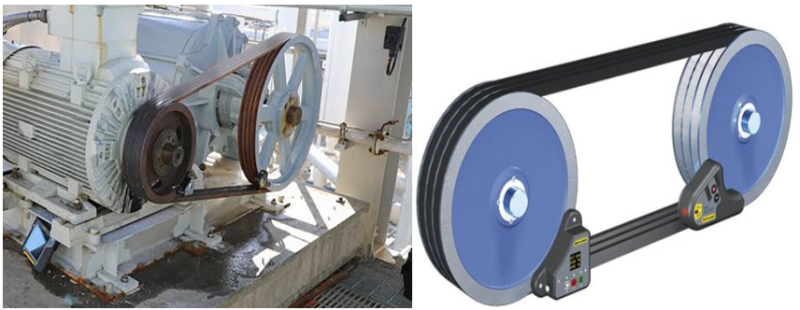
When pulleys are not aligned properly, additional loads are induced. The aim of belt alignment is to align the grooves of the drive and driven pulleys so that the belts run with minimal wear. Proper alignment extends the service life of belts and bearings, reduces vibration and noise levels, and saves energy.
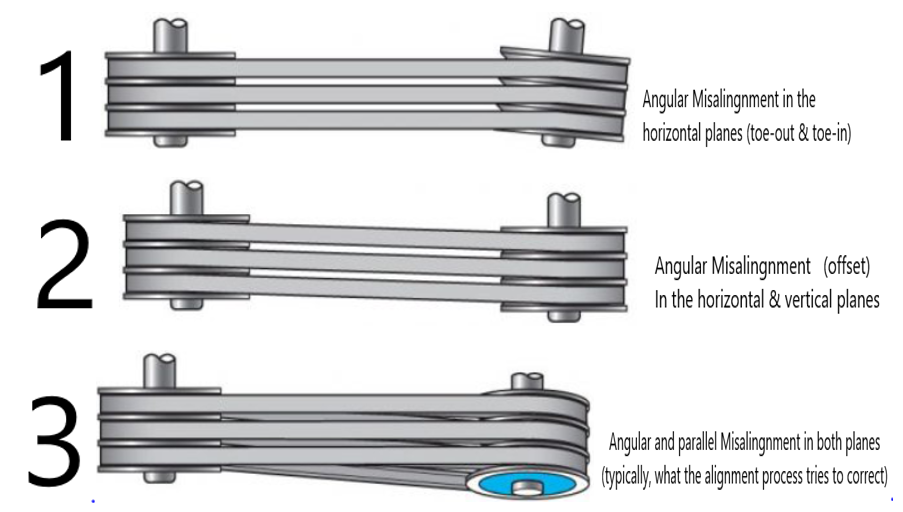
Pulley misalignment can be angular, between the driving and driven pulley in either the vertical or horizontal plane, or it can be parallel, with one pulley offset from the other as the pulleys are viewed from the edge. In practice, more than one type of belt misalignment can exist at the same time. Unless belt misalignment is corrected, a new belt will last no longer than the one it replaced.